March 11, 2026
Board Games on Digital Platforms

Robin Hegedűs
Game Designer & Developer
For many people, the importance of board gaming lies in the fact that it allows us to disconnect for a few hours from the digital world that permeates our lives. Almost everyone has probably sat down to play with someone whose eyes start flashing when their fellow player begins scrolling on their phone during another player’s turn. After all, board gaming is about gathering around a table and experiencing the game together. Well, those people have probably already scrolled past after seeing the title, or they are somewhere playing board games and not reading this at all, so we can safely dive into what it means to play board games in the digital space today. What are the advantages and disadvantages of online and offline adaptations, what platforms are available, what trends can be observed, and, since I mostly participate in Mindclash Games projects as a designer and developer, what options we have if we want to bring our own prototype into a virtual environment?
Standalone Applications
As the board game industry grows, more and more publishers see potential in developing digital versions of their popular games. From a user perspective, these are perhaps the most straightforward entry points. When someone has a favorite game they would like to dive deeper into, but their gaming group is not enthusiastic about playing match after match, it is worth checking one of the app stores. The publisher may have already collaborated with a development team to create a digital adaptation of the board game.
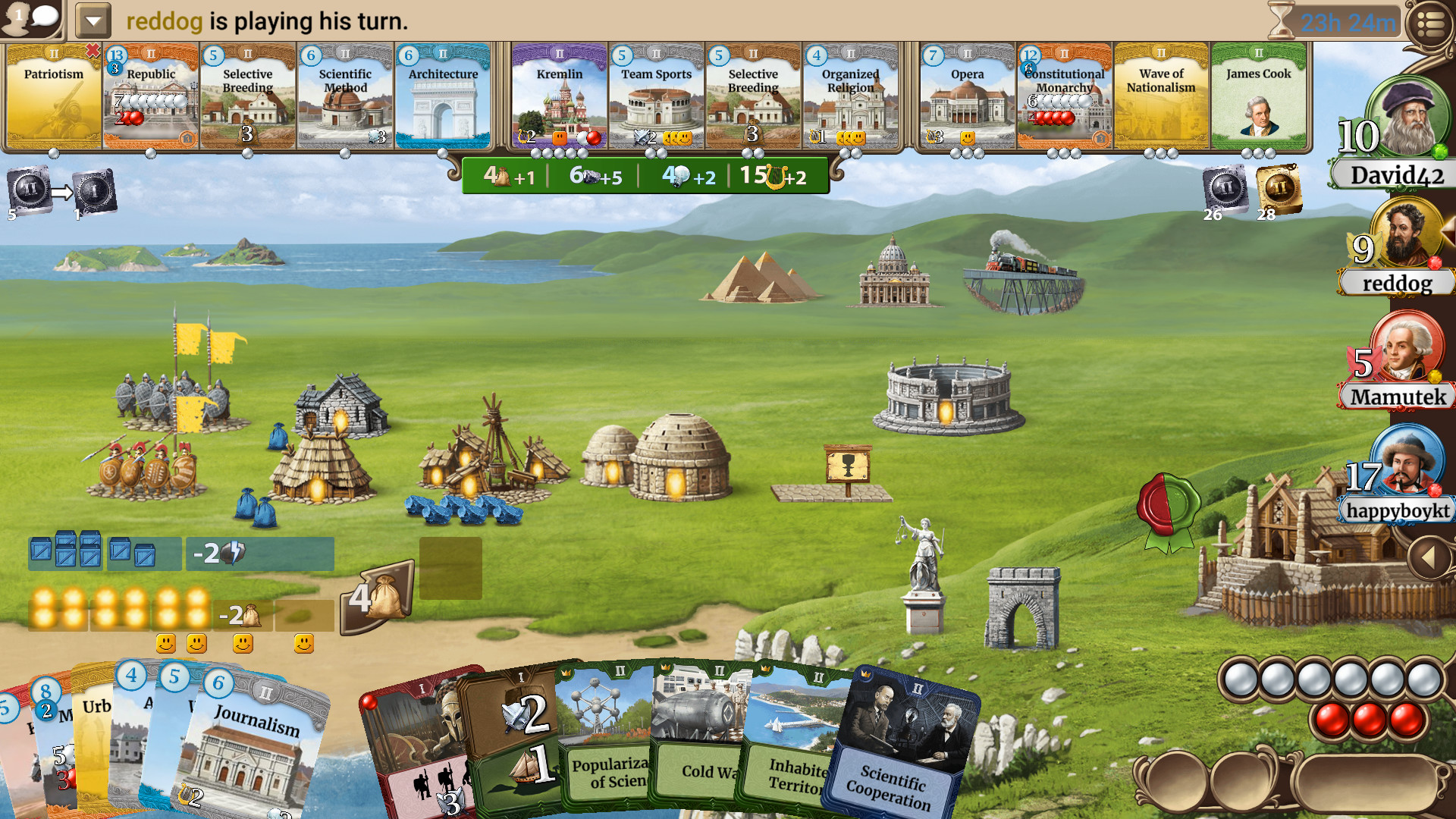
Wingspan, Gloomhaven, Root, Through the Ages, and even Twilight Struggle have dedicated digital versions that can be played both on desktop computers and mobile devices. These programs are fully tailored to the specific needs of the given game, so they provide the best possible user experience. In addition, these digital board game apps allow us to play multiplayer games solo against artificial opponents of varying difficulty levels, though the quality of these AI systems varies from game to game.
From a publisher’s perspective, however, developing such an application is quite expensive. As a result, digital versions are usually only created for games that have already proven successful on store shelves and on players’ tables.
Game Collection Platforms
The most popular online board gaming platforms were not created by publishers. Instead, they were designed to allow players to access hundreds of different games within a shared framework. Let us take a look at the three most popular platforms, Board Game Arena, Tabletop Simulator, and Tabletopia, and what they offer to players.
Gameplay Experience and Accessibility
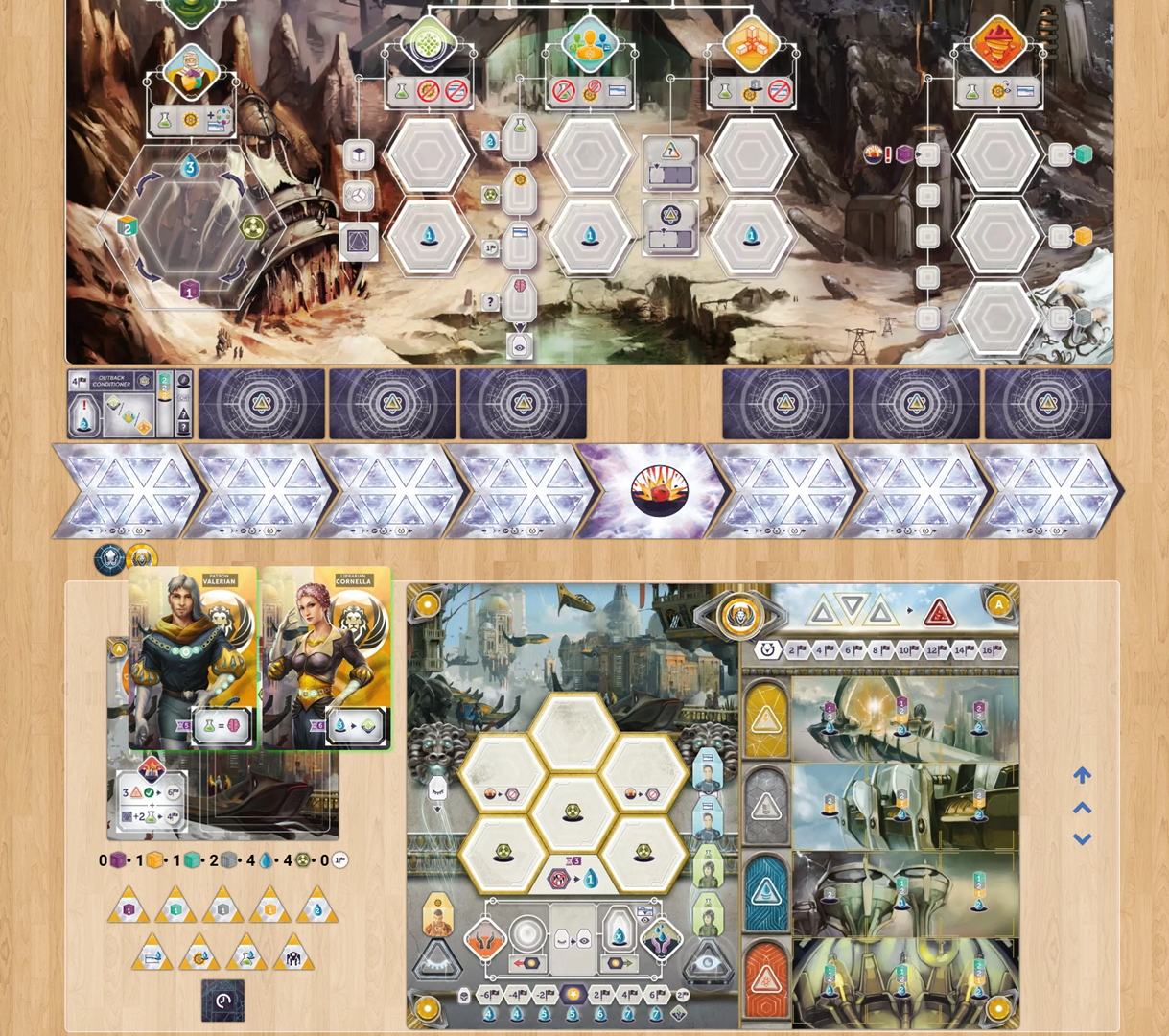
One of the most important differences between digital board game platforms is how they present games to players. Board Game Arena provides a fully automated digital experience: it handles the rules, counts the points, and manages turns, allowing players to play quickly and without errors.
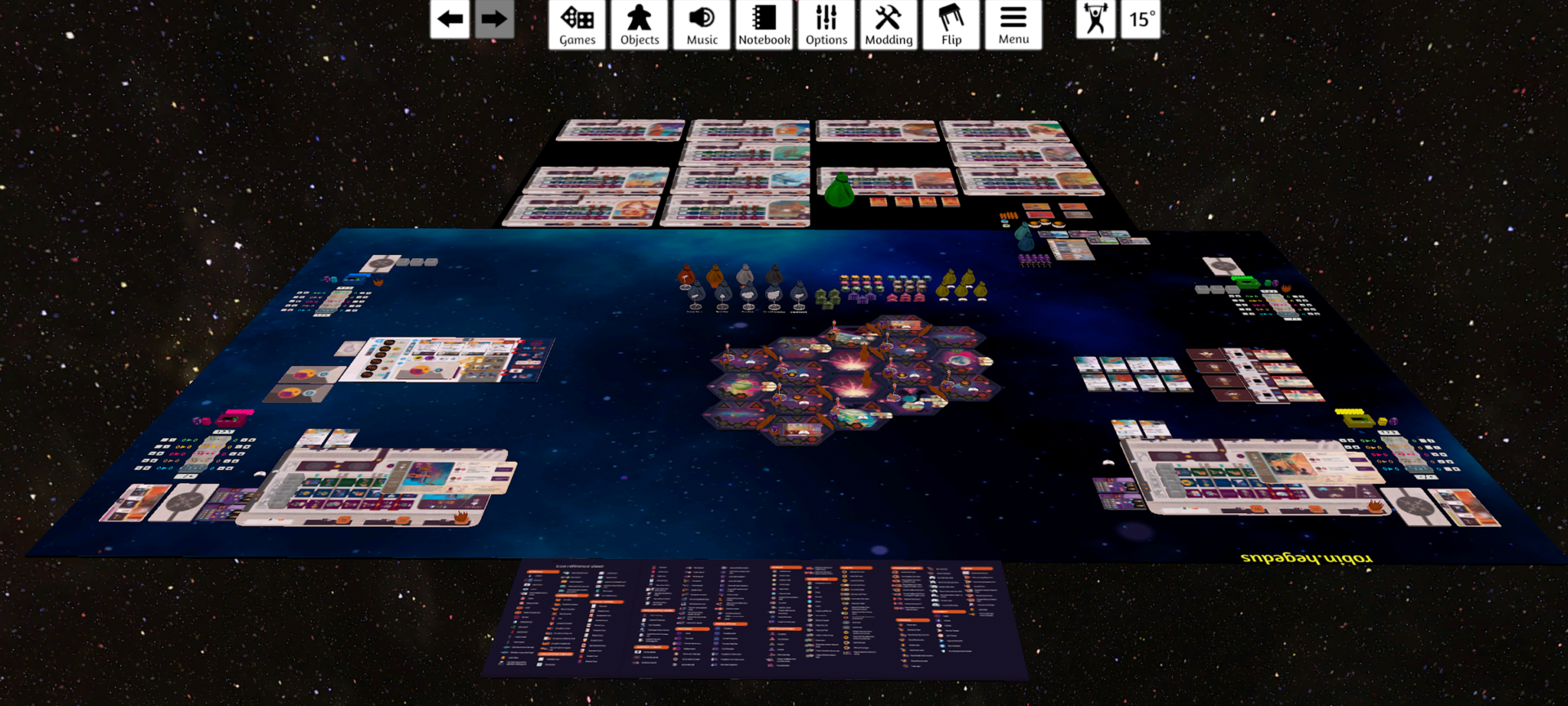
Tabletop Simulator, in contrast, is a 3D physical sandbox where players manually manipulate the components and follow the rules themselves, as if they were sitting at a real table.
Tabletopia also offers a virtual tabletop, but with much lower hardware requirements, since many games can run directly in a web browser.
From a financial perspective, Tabletop Simulator requires a one-time purchase of the software, after which most of the games themselves are available for free. On the other two platforms, players can start without paying an entry fee, but some games are only accessible during a premium subscription period.
Game Library and Target Audience
Board Game Arena offers officially licensed, fully implemented games that function according to the rules. Tabletop Simulator has an enormous library built largely on community-created mods, meaning that almost any board game can be found there. Tabletopia also provides a wide selection, mostly based on official partnerships.
The main difference is that BGA’s games are digitally automated, while the other two platforms aim to simulate the physical board gaming experience and allow greater modification.
BGA is ideal for beginners because the system helps enforce the rules and is quick to learn. Tabletop Simulator and Tabletopia have steeper learning curves, since handling physical interactions and mods requires some practice.
Another difference lies in the timeframe players imagine for their digital gaming. Of the three major platforms, only BGA provides a correspondence mode, which allows games to be played asynchronously over a longer period of time.
Smaller Competitors
Alongside the three giants, there are several interesting, older, or more specialized online board gaming platforms.
One of the genre’s veterans is Yucata.de, which is still running and continues to be updated by enthusiastic developers with new releases they find important.
Vassal.org is another ancient platform that has offered an online environment since 1996, mostly for wargames. These can be played live using a program with very low hardware requirements, or via correspondence by sending game state files back and forth. Just thinking about that brings nostalgic tears to my eyes.Two smaller platforms with limited libraries but promising potential are Screentop.gg and Rally the Troops, both of which present digital board games that are less accessible on other platforms.
If You Want to Share Your Own Game
When a publisher wants to make a successful game available as a digital board game, the path forward is fairly obvious. The situation becomes much more interesting when a developer wants to create a digital adaptation of a game that is still in development or has only recently been released.
During game design and development, we use Tabletop Simulator because it is the platform where we can most easily assemble our prototypes and iterate on them later. Fortunately, during large-scale mass testing of more complex games, it is now fairly common that many testers already own the program.
One disadvantage is that the testing audience for more casual games may not feel comfortable navigating sandbox-style interfaces like this, and we cannot necessarily convince them to purchase such a program just for our sake.
Another factor that developers must keep in mind is that games often do not behave the same way in the digital space as they do when spread out physically on the table. Some mechanisms simply work much better in person than online. For example, stacking Emberheart tokens into a tower and placing them on the board is a simple action in real life and even enhances the bidding experience, while in Tabletop Simulator it becomes an awkward series of clicks.
The digital environment can also be misleading visually. In an online sandbox we can move the camera and zoom in closely on specific components, but once those elements are printed we may realize they are far too small and unreadable for players. We had to learn this lesson the hard way during our first physical playtests after the COVID lockdowns.
Digital implementations are not only useful for testing, they also play a role in publishing and marketing a game. In crowdfunding campaigns, a key question is whether the creator wants to share a digital, playable version with the audience. Many people want to try a game before backing it, but the situation is not that simple.
Crowdfunding campaigns often present games that are not yet 100% finished. Graphic design and balancing work may still be ongoing. A non-final version available during the campaign can just as easily discourage potential supporters, because it is difficult to tell which aspects of the game will still change and which are already final.
In other cases, even after release, the nature of the game may simply not translate well into a digital environment. I have personally experienced many situations where I tried something on Board Game Arena, was not impressed, and then discovered that it felt completely different when played at the table.
Many people, however, do not give a game a second chance. It is not uncommon to see games that appear on digital platforms receive low ratings on BoardGameGeek, because players rushing to consume new releases simply want to quickly check off that they have tried them.
The Future of Digital Board Games
We now live in a time when, if we want to try a board game in digital form, there is a greater chance that it is playable somewhere than not. Likewise, with major titles it is increasingly becoming expected that the publisher will eventually release an official digital application.
As more and more games incorporate some form of digital support into their gameplay, it will be exciting to see how this fusion evolves and what happens when fully digital adaptations connect directly with our physical copies of the game.
At the same time, more and more platforms are appearing that compete for online players by offering unique titles and increasing levels of automation. Tabletop Simulator is still dominant on the game development side, but it feels very likely that if a more user-friendly alternative with lower hardware requirements appears, developers might start testing their next prototypes there instead.
As a closing thought, it is worth noting that despite the many digital alternatives available for playing and developing board games, this is still a medium that was primarily designed for the physical space. There are situations where it is simply more practical to shuffle cards, move meeples, and roll dice on a screen, but most of the time it reminds us how enjoyable it is to sit around a table and play together.
But what can I do, I keep recommending Twilight Struggle to my wife and she is not interested. Well, here is a player from Wrocław who is online, I will send them an invitation.