From the first investigation games to modern deduction and narrative mysteries, explore how the genre has evolved and discover the experiences that keep players coming back.
August 15, 2026
The World of Investigation Games

Robin Hegedűs
Game Designer & Developer
Witness Testimony
I was already a huge fan of crime fiction in elementary school. After school, I would walk down to the local library. You could borrow no more than eight books on a single library card, so I would make my way home carrying a stack of eight crime novels. Naturally, Agatha Christie and Conan Doyle were my first loves, but there was always room for a few more modern authors as well. The only thing that mattered was that there had to be an investigation.
For a few years, whenever someone asked me what I wanted to be when I grew up, my answer was always “private investigator”, and I entertained my parents on rainy Sunday afternoons by taking their fingerprints. Even back then, I desperately wanted to play an investigation board game. Since there was nothing of the sort available around us, apart from Scotland Yard and Cluedo, that remained nothing more than a wish for quite some time. But as soon as a game from the genre finally appeared on store shelves, I immediately grabbed a copy and could hardly wait to play it.
And thinking about it now, after investigating countless crimes packed into cardboard boxes with my friends, I am no less excited to get the next one onto the table. I thought that feeling could not get any stronger, but then I somehow found myself experiencing investigation games from the creator’s side as well… and designing COURTROOM.
So it is with great pleasure that I present the world of investigation games.
Case Files
If we are willing to be a little loose with the definition, the first investigation game is as old as detective fiction itself, dating all the way back to Edgar Allan Poe’s 1841 story The Murders in the Rue Morgue.
Even nineteenth-century detective stories had already developed a structure in which the author, like an omniscient game master, presents a list of suspects, reveals evidence and circumstances, and lets the reader, as the player, solve the puzzle. Detective stories are always full of twists and turns, but they generally follow one important rule: it is considered rather unfair to reveal a solution at the end of the book that could not have been deduced from the information available beforehand.
The conventions of the genre are so clearly defined that, from a certain perspective, a classic detective story can almost be considered a solo narrative investigation game.
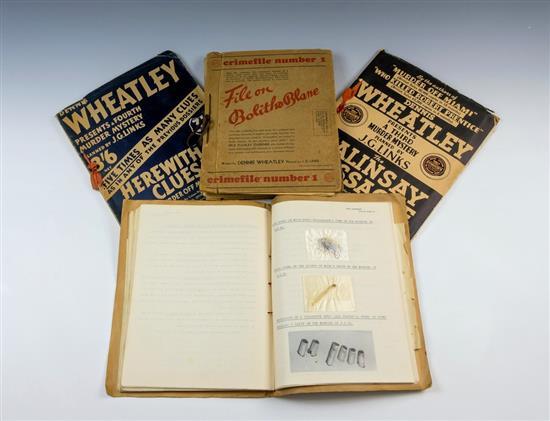
1936 is an especially important year, and not only because Courtroom is also set in 1936. Two important investigation experiences appeared around this time. The first was Murder Off Miami, created by Dennis Wheatley and J. G. Links. It was essentially a dossier filled with all kinds of evidence, which the player had to examine in order to identify a murderer.
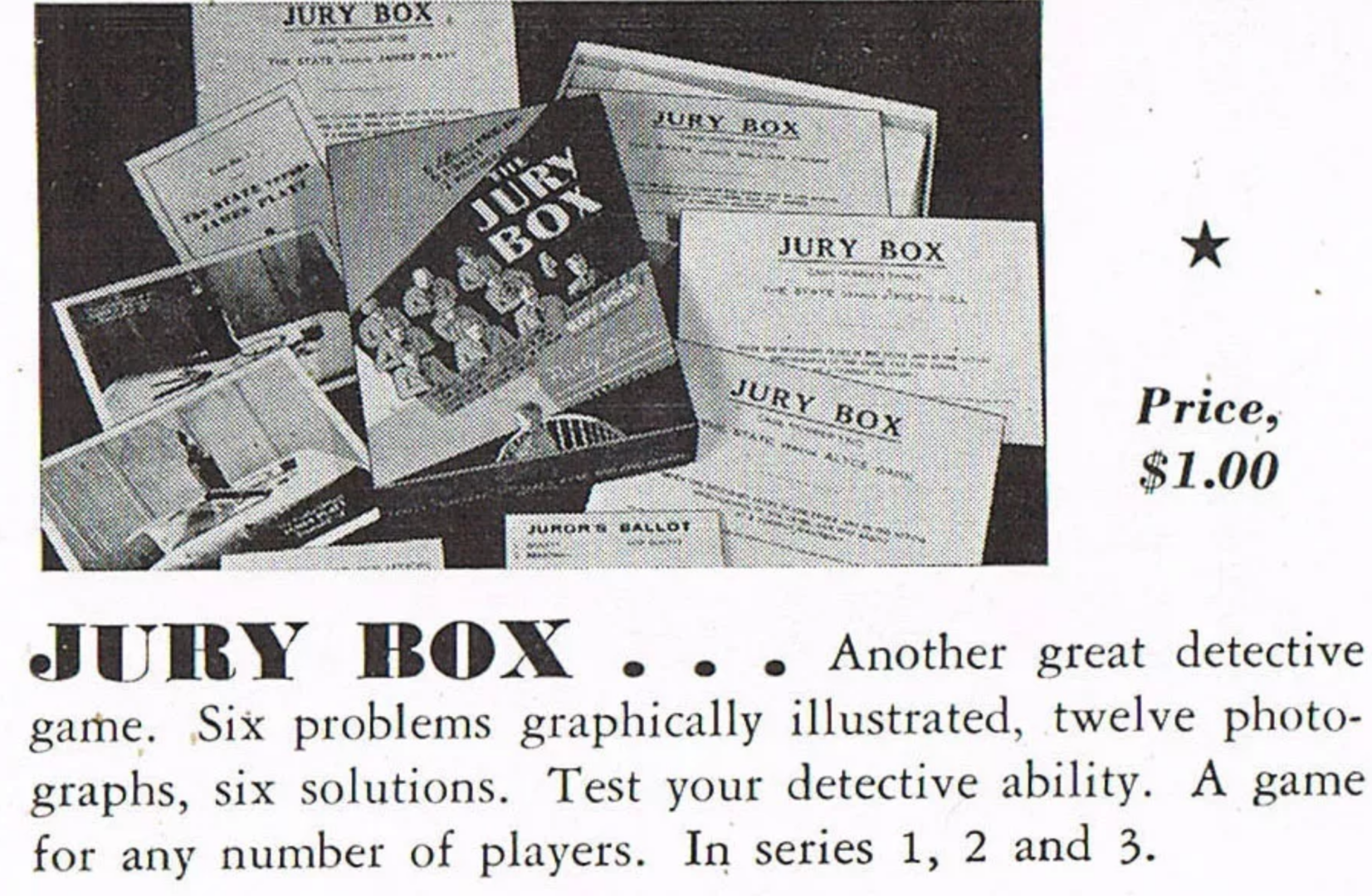
The other was Roy Post’s The Jury Box, published by Parker Brothers. Here, players took on the role of jurors and worked through various cases included in the box, using the available evidence to reach a verdict.
So long before apps, QR codes, and sprawling board game campaigns appeared, people were already sitting around tables, opening envelopes full of evidence and arguing over whether the defendant was guilty. Wonderful, isn’t it?
It’s Just Deduction
Whenever you show a resource-management game to someone who is not particularly familiar with modern board games, there is a good chance they will immediately ask, “So, is this like Catan?” Investigation games have been blessed with a similar phenomenon: everyone wants to compare them to Cluedo.
And it is hardly surprising. Since its release in 1949, an estimated 150 million copies of the game have been sold. Cluedo helped establish the deduction genre, which remains an important subcategory of investigation games today. In these games, detective work becomes abstracted into two basic mechanisms. Players gather information, then use it to eliminate every impossible option until only the solution remains.
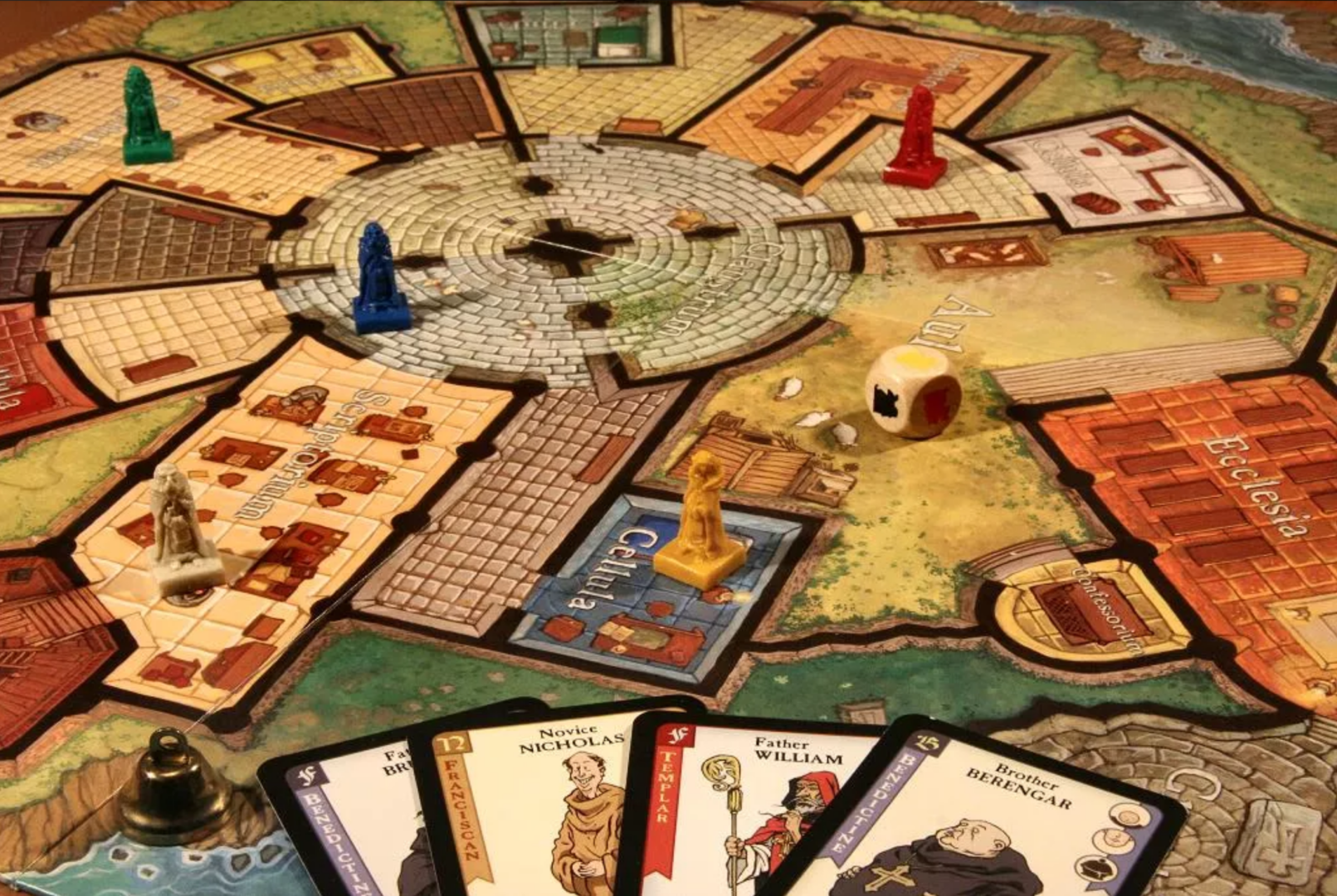
These games almost always give players dedicated note sheets, usually featuring pre-printed grids where conclusions can be tracked step by step, almost like solving a Sudoku. Some, such as Cluedo, Bruno Faidutti’s Mystery of the Abbey or Martin Wallace’s P.I., still use the trappings of the detective genre. Others use completely different themes, from hunting monsters in Cryptid to searching for a distant planet in The Search for Planet X.
Another branch of investigation games consists of tracking and manhunt games, where deduction is integrated into a more action-packed chase. The great pioneer of this genre was the 1983 Spiel des Jahres winner Scotland Yard, in which a team of detectives pursues Mr. X through London. Here, the investigation unfolds in real time, with the criminal’s occasional appearances, the layout of the map, and the different forms of transportation they use all providing clues. The hidden movement mechanism has remained popular ever since, with new iterations appearing regularly over the years, including Letters from Whitechapel, Fury of Dracula, and Hunt for the Ring.
Narrative Investigation
As we have already seen, the roots of investigation board games can be traced back to gamified detective stories, but for a long time these experiences remained isolated curiosities rather than forming an established genre. Then, in 1981, one of the most influential games in the genre arrived: the Spiel des Jahres-winning Sherlock Holmes Consulting Detective.
Narrative games often use booklets with branching sections that allow players to make decisions, much like the Fighting Fantasy gamebooks. Sherlock Holmes Consulting Detective, however, built a system that, with only slight exaggeration, can feel almost like an open world.
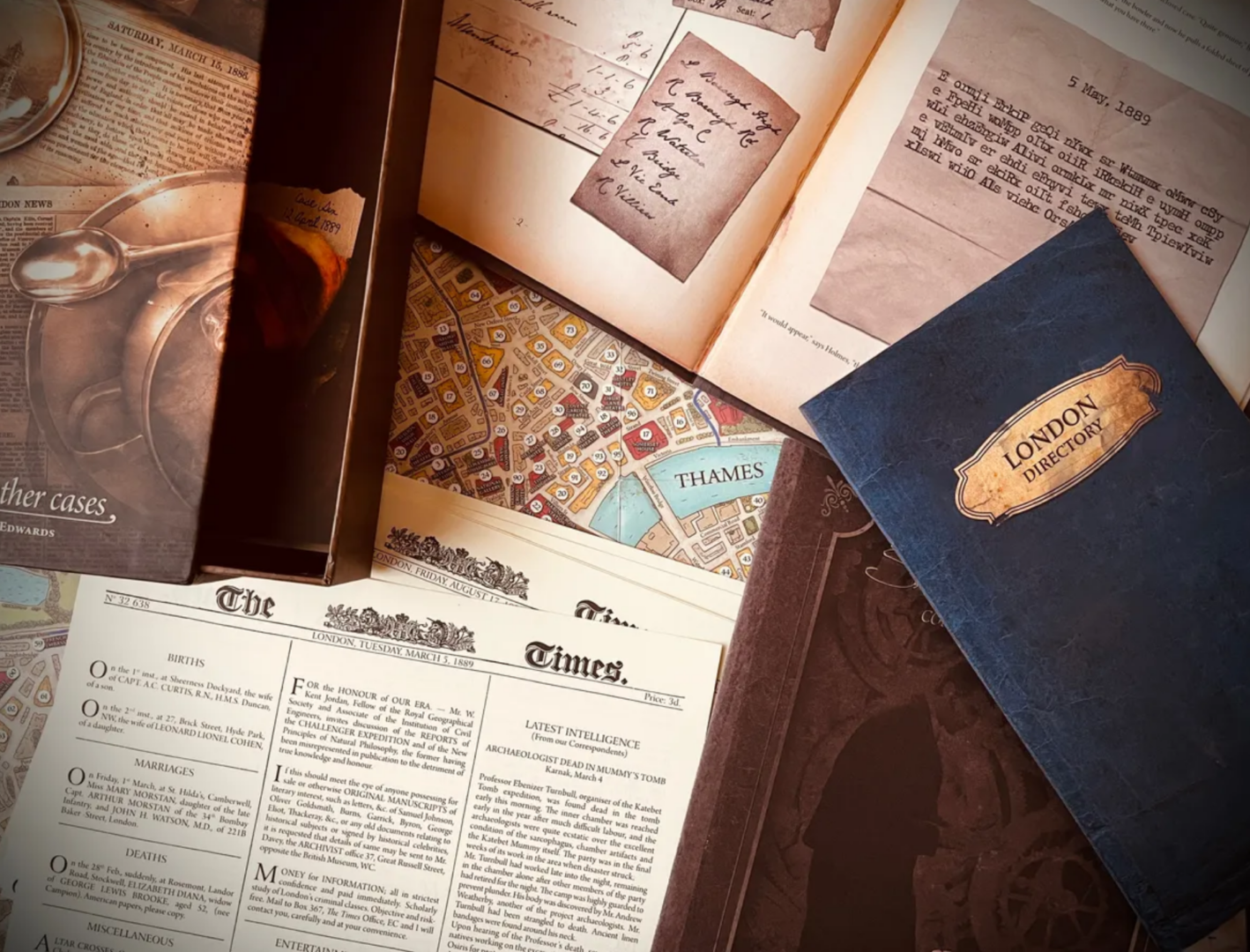
After reading the introduction to a case, players can jump to any entry in the casebook, provided they can figure out which numbered location they want to investigate. To help them, they have a map of London, a Directory, and the front page of that day’s The Times. Players can follow up on names mentioned during the investigation, discover leads in current news stories or advertisements, or even draw conclusions from where different locations are situated on the map. The clues are no longer handed to players as abstract pieces of information. Players have to actively search for them, immerse themselves in the story, and examine causes and consequences within the fictional world.
Sherlock Holmes Consulting Detective arrived well before the board game boom that began in the 1990s, so it took quite some time before other major titles appeared in the genre. By the 2010s, however, a much larger audience had become open to the diversity of modern board games, and new narrative investigation games began appearing on the market. Watson & Holmes introduced competing investigators into the formula in 2015, while Mythos Tales moved the investigation into the world of Lovecraftian mysteries the following year.
Then, in 2018, Detective: A Modern Crime Board Game brought the formula into the world of modern police investigations and introduced significant digital integration. Investigators could search fictional databases and use the internet to track down websites connected to the game. Following this same path of digital integration, Chronicles of Crime also appeared in 2018. Here, players could use their phones to look around crime scenes and scan QR codes, allowing different game elements to be combined freely. This created a responsive environment for investigation, capable of delivering information without revealing the mechanical machinery working behind the scenes.
One problem appears again and again in investigation games: how do you interrogate someone who is really nothing more than a paragraph in a book? How can a game account for the fact that witnesses sometimes have a reason to lie? Detective: City of Angels offers a brilliant solution: put another human being behind the suspect. One player takes on the role of the Chisel, working against the investigators and trying to hinder them within the framework provided by the rules. This means that narrative investigation no longer has to feature only competing detectives. Even the forces actively trying to stop them can now be placed under a player’s control.
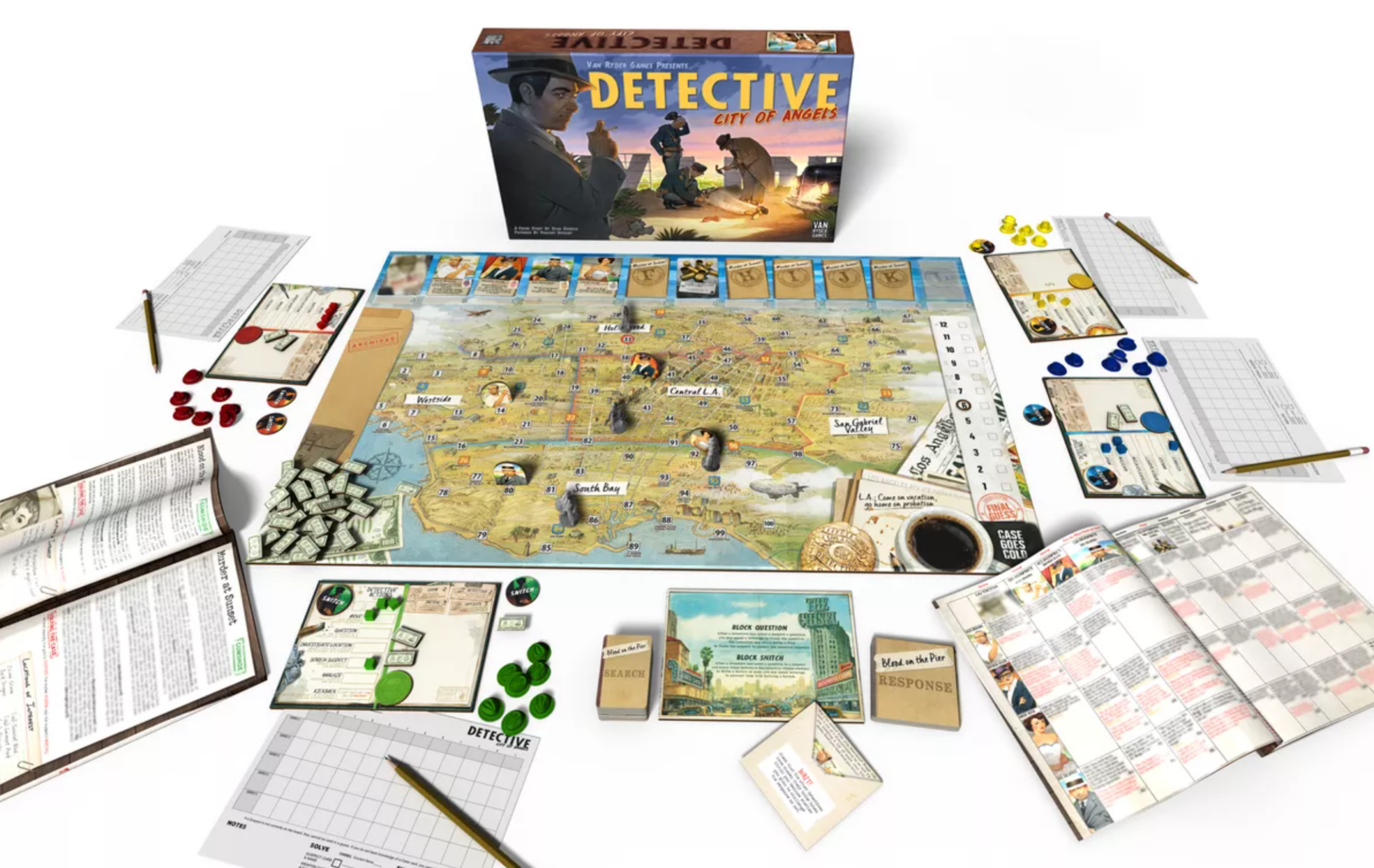
Over the past decade, narrative investigation games have become sufficiently established, and board gamers have come to realize that, although one of these boxes may not offer as many playthroughs as a copy of Cluedo, its investigations can provide an experience a thousand times richer. As a result, there is now room for much more unusual approaches as well.
Think of MicroMacro: Crime City, where players reconstruct sequences of crimes across an enormous illustration reminiscent of Where’s Waldo?, or Perspectives, where the players do not all have access to the same information at the same time.
Murder Mystery Dinners, Escape Rooms, Werewolves, and the…
Crime fiction remains one of the most popular genres in books and film, and for some reason we seem to have an insatiable curiosity when it comes to unraveling crimes. Investigation games have spawned countless genre-crossing cousins that draw on this same fundamental human curiosity.
Many escape-room and puzzle games place themselves within the setting of a classic or modern investigation, such as EXIT: The Game and Unlock!. Other games move further away from physical clues and components, placing investigation within the framework of social deduction, as in Werewolf, or creating an elaborate murder mystery dinner party for the players, as in the Deadly Dinner series. All of this shows just how diverse the world of investigation games has become. Once someone experiences a well-designed investigation game with friends, whether it involves competitive or cooperative detective work, they are likely to start looking for the next case, and then the next one.
This raises a perfectly reasonable question: why is a post like this appearing on the Mindclash Games blog? After all, we have never published an investigation game. The answer is very simple: Courtroom is coming soon! Make sure you’re subscribed to the Mindclash Play newsletter to stay updated!